Arctic expedition continues as Nord Hus heads north along Greenland coast
Lonnie Dupre and Pascale Marceau will reunite with their sailboat, the Nord Hus, on June 15 and continue a journey along Greenland’s coast, gathering data for scientific research and reconnecting with communities Dupre visited 25 years ago.
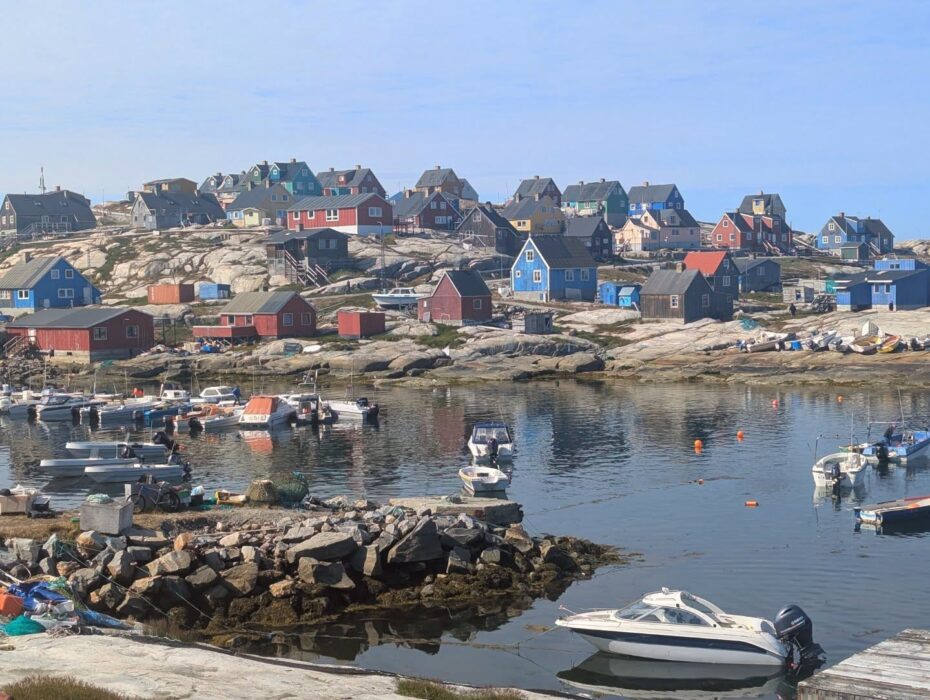
The Nord Hus began its expedition from Knife River last spring, traveling 3,450 nautical miles to west-central Greenland. The voyage began in cold conditions, with ice still covering Lake Superior.
“I remember there being about half an inch of ice on the decks,” Dupre told WTIP. “We pushed up the dock April 10, and encountered ice on the far end of Lake Superior. So we had to wait for a couple weeks for that to part so we could get going through the locks. So we got a little bit of Arctic before we got to the Arctic.”
Despite developing a leak between ports, the Nord Hus reached Green on schedule. Something Dupree described the journey as “a feat in itself.” He and Marceau had hoped to travel farther north but decided they were moving too quickly and risked missing some of Greenland’s key features and communities.
This year, Dupre hopes to reconnect with some of the same communities he visited while circumnavigating Greenland decades ago.
“I was taking a lot of slide film, old Kodachrome 64 and Velvia 50 slide film of Inuit families, and now I’ve made prints of those photos,” Dupre said.
He plans to share the photographs with the communities he visits.
The Nord Hus will also assist with scientific research during its Arctic voyage.
“We’re partnered up with Adventure Scientists,” Marceau said. “They’re a citizen science organization that pairs up adventurers with scientists, and so we have two different groups we’re working with.”
The crew will first document the effects of climate change on auk colonies, building on research first conducted by the Sea Watch Foundation in the 1980s.
The crew also will collect environmental DNA, or eDNA, samples from Arctic waters and send them to a doctoral student in Singapore for analysis.
“Basically, every 100 miles or so, we pause the boat and take a sample of the water with a device, and this goes to the scientist, who then is going to analyze the eDNA, which blows my mind. Marceau said. “If there is a sea mammal or any kind of ocean creature in the vicinity, it will pick up in the water, and they can identify to a great degree what that mammal was, and family, and you know, gender, and all that.”
While many people are celebrating the arrival of summer, Marceau and Dupre will be heading north into some of the coldest environments in the Northern Hemisphere.
“I’m a soft candle,” Dupre said. “I don’t do well above room temperature, so I like going to cold places.”
“I’m drawn to the Arctic, mainly because of its kind of isolation and remoteness, and what that brings in terms of deep inside the feelings you get from self-reliance,” Marceau said.
WTIP spoke with Dupre and Marceau ahead of their voyage north. Audio from that conversation is available below.
Josh Hinke June 16, 2026